Luxury Residential Design Trends 2026: Crafting Sanctuaries That Blend Elegance with Functionality
Updated: May 30
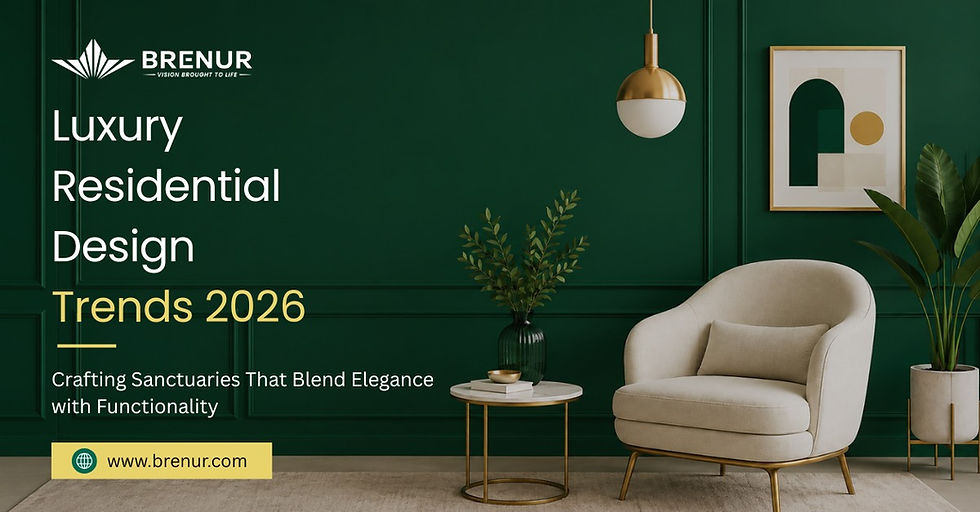
For decades, luxury residential architecture was largely defined by visible grandeur. Expansive foyers, oversized formal living rooms, glossy imported marble, and decorative excess became symbols of prestige. However, the definition of luxury has undergone a remarkable transformation. Entering 2026, homeowners are no longer seeking spaces designed only to impress visitors; they are investing in homes that improve everyday living, support emotional well-being, and seamlessly integrate functionality into beauty.
Today, the most influential luxury residential design trends 2026 are centered around comfort, wellness, sustainability, and intelligent spatial planning. Premium design firms like BRENUR India Pvt Ltd are embracing this evolution by creating homes that combine timeless aesthetics with highly functional living experiences. Modern luxury is no longer performative; it is deeply personal, calming, and purpose-driven.
This evolution is reshaping the future of modern residential architecture, moving away from surface-level extravagance toward highly responsive living spaces where every material, lighting layer, and architectural detail serves a meaningful purpose.
“The ultimate modern privilege is psychological comfort. A home achieves true luxury when its functional systems disappear entirely into the architecture, leaving the individual free to reset in absolute peace.” |
Key Features Defining Luxury Residential Design Trends 2026
The next generation of luxury homes is being shaped by intelligent functionality and sensory comfort. Some of the defining trends include:
Hidden smart home automation systems
Space-efficient multifunctional layouts
Wellness-inspired spa bathrooms
Sustainable luxury materials
Circadian lighting integration
Acoustic privacy engineering
Biophilic design elements
Concealed storage systems
Matte-finish natural textures
Energy-efficient lighting and ventilation
These features are redefining what premium living truly means in 2026.
Invisible Engineering: The Blueprint of Responsive Luxury
One of the most influential shifts in best luxury interior design ideas for modern homes is the rise of invisible technology integration. Earlier smart homes often showcased technology through bulky control panels, exposed automation devices, and visible gadgets that interrupted interior harmony. Modern luxury design eliminates this disruption through architectural integration.
Instead of relying on standalone devices, advanced systems are seamlessly embedded into the structure itself. Precision climate-control vents are hidden inside shadow-line ceilings. Circadian lighting systems are integrated behind smooth plaster walls. Acoustic insulation layers are concealed beneath premium flooring systems to create quiet, calming environments.
Leading firms such as BRENUR India Pvt Ltd are increasingly incorporating these invisible engineering principles into contemporary residential projects, ensuring that technology enhances comfort without overwhelming the visual design language.
This approach allows homeowners to enjoy the benefits of technology without compromising visual purity. The result is a highly sophisticated environment where lighting, temperature, air quality, and acoustics continuously optimize themselves in the background.
Modern smart luxury homes are now being designed to actively support emotional wellness by reducing stress, minimizing sensory clutter and enhancing daily comfort.
The Evolution of Material Honesty
Luxury materials are also evolving significantly. High-maintenance glossy surfaces are steadily being replaced by durable, tactile materials that age gracefully over time.
Today’s luxury homeowners are favoring:
Matte-honed quartzites
Roman travertine textures
Micro-brushed hardwood flooring
Natural limewash walls
Sustainable engineered stone
Soft-touch metal finishes
This movement toward “material honesty” reflects a broader shift toward authenticity and longevity. Instead of fragile surfaces that require constant maintenance, homeowners now seek finishes that combine resilience with understated elegance.
Sustainability has also become a major component of luxury residential design trends 2026. Eco-conscious materials, energy-efficient lighting systems, passive cooling strategies, and water-saving fixtures are increasingly viewed as essential luxury features rather than optional upgrades.
Companies like BRENUR India Pvt Ltd are helping homeowners adopt these modern material trends while maintaining a refined and timeless luxury aesthetic.
The Premium Footprint: Optimizing Space-Efficient Luxury Interiors
The rising cost of metropolitan real estate has transformed how designers approach luxury living. Opulence is no longer tied to oversized square footage. Instead, modern homeowners prioritize curated, multifunctional spaces that maximize usability without sacrificing visual sophistication.
This evolution has elevated the importance of space-efficient luxury interiors.
Designers are increasingly treating every wall, partition and storage zone as an adaptable architectural asset. Concealed pocket doors, integrated cabinetry, fold-away workstations, and hidden motorized storage systems allow rooms to transform effortlessly throughout the day.
For example, a walnut-paneled feature wall may discreetly conceal:
A home office
A private lounge
A hidden entertainment system
A luxury bar setup
This flexibility creates interiors that adapt naturally to changing daily routines while maintaining a clean, uncluttered aesthetic.
Modern luxury is now measured by how intelligently a home functions not simply by how large it appears.
Wellness-Centered Living: Biophilic Design and Recovery Spaces
Perhaps the most important transformation in wellness-focused interior design is the growing emphasis on homes as emotional recovery spaces. Luxury residences are no longer passive environments; they are becoming active wellness ecosystems designed to improve mood, sleep quality, focus, and relaxation.
Monolithic Wet Room Enclaves
Bathrooms have evolved into spa-inspired wellness retreats. Luxury residential projects now feature:
Zero-threshold walk-in showers
Smart steam systems
Deep soaking stone bathtubs
Heated flooring systems
Linear drainage integration
Anti-slip matte surfaces
These spaces combine aesthetics with ergonomic safety while creating a calming sensory experience.
Circadian Lighting Integration
Lighting design plays a major role in supporting emotional health. Advanced circadian lighting systems mimic the natural rhythm of daylight throughout the day.
Morning lighting uses cooler, energizing tones to improve focus and productivity, while evening settings transition into soft amber hues that promote relaxation and healthy sleep cycles.
Biophilic Interior Elements
Nature-inspired interiors are another defining aspect of modern luxury homes. Designers are incorporating:
Indoor greenery
Natural ventilation
Stone textures
Water-inspired design elements
Large daylight openings
Organic material palettes
Luxury-focused firms such as BRENUR India Pvt Ltd continue to prioritize wellness-driven layouts that create a strong connection between architecture, nature and everyday living.
These biophilic elements create calming environments that reconnect residents with nature and improve overall mental well-being.
Conclusion: Crafting the Future-Proof Luxury Home
The future of luxury residential design trends 2026 lies in creating homes that quietly support daily life while delivering timeless elegance, emotional comfort, and intelligent functionality.
True luxury is no longer defined by visual excess alone. It is found in the effortless glide of a concealed partition, the calming effect of natural light, the silence created by acoustic engineering, and the emotional peace that comes from living in a highly responsive environment.
By embracing sustainable materials, investing in invisible wellness technology, optimizing space-efficient layouts, and prioritizing human-centered design, homeowners can create far more than beautiful interiors. They can build future-ready sanctuaries that elevate everyday living for years to come.
With innovative firms like BRENUR India Pvt Ltd driving the future of residential architecture, homeowners can confidently invest in spaces that combine elegance, functionality, wellness, and timeless sophistication.


